A Battery Forklift can look like a simple purchase: choose a capacity, compare prices, and arrange delivery. On a real warehouse floor, the decision is less tidy. A loaded pallet, a cold room, and two shifts can expose weaknesses that a showroom visit will not.
The International Energy Agency reported that global electric-car sales exceeded 17 million in 2024, representing more than one in five new cars sold. That figure does not measure forklift adoption, but it signals how quickly battery technology is scaling. In its 2024 World Energy Outlook, IEA Executive Director Fatih Birol said, “The Age of Electricity is upon us.” For fleet buyers, the practical question is whether a particular truck’s battery, charger, and duty cycle work together—not whether electrification sounds inevitable.
This guide compares seven Battery Forklift options for sale in 2026, focusing on capacity, runtime, charging needs, maneuverability, and service support. Fit matters. A compact three-wheel model may turn neatly between racking, while a heavier four-wheel truck may feel steadier with dense loads. Buyers should verify specifications with the manufacturer and test trucks against their own routes. Published comparisons rarely share identical test conditions. That is an inconvenient gap, and it deserves attention. A low purchase price can also hide charger costs or battery replacement needs. The best choice is the one that handles your actual shift reliably, not the one with the longest feature list.
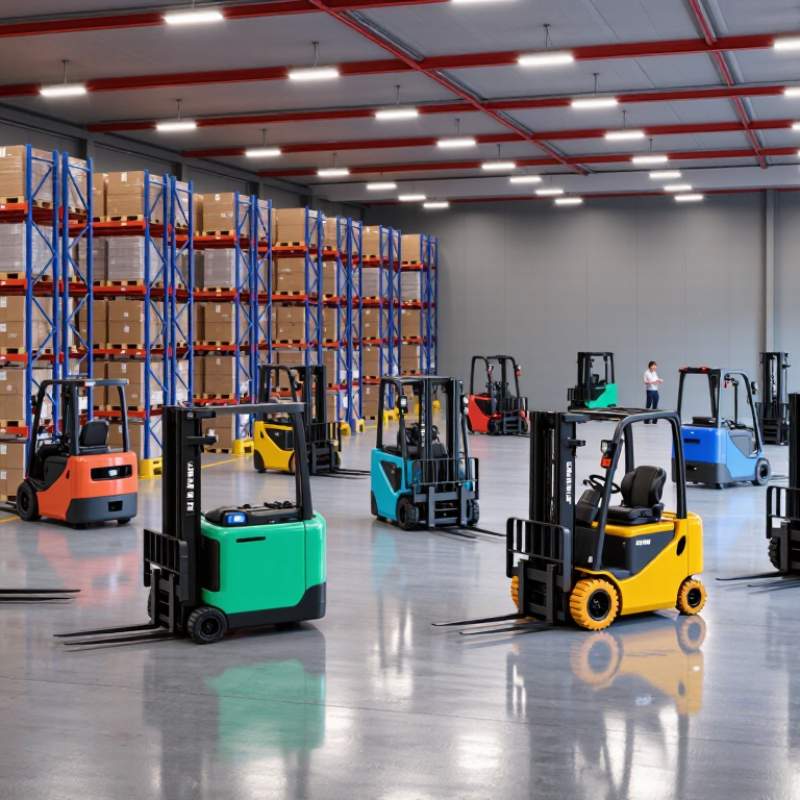
How Battery Forklifts Work and Where They Are Used
A battery forklift stores electrical energy in a rechargeable battery and uses it to power its drive motor and lifting system. When an operator presses the accelerator, a controller regulates power to the wheels. A separate electric motor typically drives the hydraulic pump, which moves oil through the mast cylinders to raise or lower a load. The controls may feel simple, but smooth operation takes practice.
Many models use lead-acid or lithium-ion batteries. Charging routines differ, so operators should follow the equipment manual and the battery maker’s instructions. A quick glance at the charge indicator is not a full battery check. Runtime changes with load weight, travel distance, lift height, floor conditions, and temperature. A forklift moving pallets all day may need a different charging plan from one used for occasional stockroom tasks.
These machines are common in warehouses, food and beverage facilities, retail back rooms, and other indoor spaces. They produce no exhaust at the point of use and often run more quietly than fuel-powered units. That helps in enclosed work areas. But they are not maintenance-free: battery condition, connectors, tires, brakes, and hydraulic hoses still need regular inspection. Charging space also matters. A tight aisle or poorly planned charging area can disrupt work, even with a well-sized forklift. A site assessment can reveal those practical limits before purchase.
Key Criteria for Evaluating Battery Forklifts in 2026
7 Best Battery Forklifts for Sale in 2026
Key Criteria for Evaluating Battery Forklifts in 2026
Battery forklifts can look similar online, yet their operating costs depend on the worksite. Start with rated capacity at the load center, not just the headline lifting figure. Compare lift height, mast visibility, aisle width, and turning radius with your actual rack measurements. Estimate runtime using shift length, travel distance, attachment use, and idle time. A battery that lasts one shift on paper may struggle during cold starts or repeated heavy lifts. Small details matter. Check charging requirements too.
Tips: Ask for a duty-cycle demonstration with a similar load. Record battery percentage before and after a representative shift. Check the floor first; rough joints and ramps can affect energy use.
For each forklift, review warranty terms, battery replacement costs, parts access, and technician response times. Request a written quote that separates the truck, battery, charger, and delivery costs. A larger battery is not automatically better; its added weight and charging needs may not suit every site. No scorecard is perfect. Recheck estimates after a real trial, since daily usage can expose assumptions that looked reasonable in a spreadsheet.
Seven Battery Forklifts for Sale in 2026
Seven battery forklifts for sale in 2026 serve different jobs, not just different budgets.
A three-wheel counterbalance truck turns tightly in narrow aisles; a four-wheel model suits heavier loads and rougher yard approaches. A stand-up reach truck helps operators move quickly between racks. A deep-reach truck handles pallets stored farther inside the rack. Each requires suitable aisle widths and load ratings.
For picking and floor-level movement, consider an electric order picker, a walk-behind stacker, or an electric pallet truck. Check lift height, rated capacity at the actual load center, battery chemistry, charging time, and whether the truck can fit through your narrowest doorway. Small details matter. A long shift can expose a battery shortfall that looked minor during a short demonstration.
The International Energy Agency’s Global EV Outlook 2024 reported that lithium-ion battery pack prices fell about 14% in 2023. That is useful market context, but forklift pack prices and duty cycles can differ. Request a site-specific energy estimate and test a loaded truck on your real route. Real sites are messier. Include charger placement, cold storage, floor condition, and operator visibility in the trial. One awkward turn can change the best choice.
Comparing Lift Capacity, Battery Type, and Operating Costs
A battery forklift’s rated capacity is only a starting point. Compare machines at the same load center, lift height, and attachment setup; a long pallet or clamp can reduce usable capacity. OSHA’s powered-industrial-truck guidance stresses checking the truck’s data plate for its rated capacity and load center. A 5,000-pound rating does not mean every load weighing 5,000 pounds is safe. Measure the heaviest pallet, then check the proposed lift height. Small details matter.
Battery chemistry changes the work rhythm. Lead-acid packs often require scheduled charging and cooling, while lithium-ion packs can support opportunity charging during breaks. BloombergNEF’s 2024 Battery Price Survey put the average lithium-ion pack price at $115 per kilowatt-hour, but that is a broad market benchmark, not a forklift battery quote. Pack design, charger, warranty, and replacement terms can shift the real purchase cost. Very different duty cycles.
Operating costs need local numbers. The U.S. Energy Information Administration reported an average industrial electricity price of about 8.13 cents per kilowatt-hour in 2024. At that rate, a measured 20-kWh charge costs roughly $1.63 before demand charges and charging losses. Compare that bill with fuel, maintenance, battery replacement, and downtime. I would check actual charger-meter readings; estimates can miss badly. A quiet truck still becomes expensive when its battery cannot cover the shift.
How to Choose the Right Battery Forklift for Your Operation
7 Best Battery Forklifts for Sale in 2026
How to Choose the Right Battery Forklift for Your Operation
Choosing a battery forklift starts with the work, not the advertised lift capacity. Check the heaviest load, its dimensions, and the load center shown on the equipment plate. A pallet of dense tile can behave differently from a bulky, lighter load. Measure aisle widths and door clearances, too. A truck that fits the warehouse map may still struggle around a tight corner.
Think through daily use. Estimate operating hours, peak shifts, and time available for charging. For multi-shift work, battery capacity and charging arrangements matter as much as rated capacity. Cold rooms, ramps, rough floors, and frequent lifting can also affect performance. Ask a qualified dealer to compare specifications with your actual loads and site conditions. A spreadsheet helps, but it may miss awkward turns.
Tips: Record a typical shift before requesting quotes. Note load weights, lift heights, travel distances, and breaks. Check where chargers can be installed and whether operators can reach them safely. Ask about battery replacement, routine service, and parts availability. Small detail, big impact. Leave room in the plan for an unusually busy day; forecasts are rarely perfect, and that assumption deserves a second look.
FAQS
No. Check the data plate, load center, lift height, and attachment setup. A long pallet or clamp can reduce usable capacity.
Record load weight, dimensions, lift height, aisle width, and door clearance. A dense tile pallet may handle differently from a bulky load.
Lead-acid batteries often need scheduled charging and cooling. Lithium-ion batteries may allow charging during breaks. Timing matters.
At 8.13 cents per kilowatt-hour, about $1.63 before charging losses and demand charges. Check your local electricity rate.
Include fuel, maintenance, battery replacement, charger costs, and downtime. Meter readings beat tidy guesses.
Compare battery capacity, charging access, peak hours, and available breaks. One battery may not cover every shift.
Yes. Cold rooms, ramps, rough floors, and frequent lifting can change how a truck performs. Awkward turns count, too.
Record a typical shift, then allow for unusually busy days. A neat spreadsheet can still miss a tight corner.
Conclusion
This guide explains how a Battery Forklift uses stored electrical energy to power travel and lifting, and why these machines are suited to warehouses, distribution centers, and other operations where emissions, noise, and indoor air quality matter. It outlines the key factors to consider in 2026, including load capacity, lift height, maneuverability, battery chemistry, charging time, runtime, maintenance needs, and total operating cost.
The article also compares seven types of battery forklifts for sale, highlighting how their capacities, battery systems, and expected costs can suit different workloads. Rather than choosing by purchase price alone, buyers should assess daily duty cycles, aisle space, floor conditions, charging access, and the loads they handle. Matching these practical requirements to the right truck and battery setup can help improve productivity and keep long-term costs predictable.
 Wings
