 Wings
Wings
Wings
Wings
Choosing China’s best All Terrain Forklift suppliers requires more than comparing prices online. Global buyers need equipment that performs reliably on gravel, mud, slopes, construction sites, and uneven agricultural ground. A suitable machine should offer stable lifting, strong traction, clear operator visibility, and a practical load capacity. Tire design matters too. Deep-tread pneumatic tires can make a visible difference beside a muddy loading area.
Eric Gakstatter, an experienced forklift safety educator and industry writer, has stated, “The right forklift is the one that matches the application.” This principle deserves attention. A powerful engine cannot compensate for poor stability or unsuitable attachments. Buyers should examine factory experience, quality-control records, testing procedures, and export support. ISO-based processes may help, but certificates alone do not prove real-world performance.
Reliable Chinese suppliers usually provide detailed specifications, load charts, service manuals, spare-parts planning, and operator training resources. Ask for references from similar industries. Request videos of machines working on uneven surfaces. Better still, arrange an independent inspection before shipment. Small details matter, such as ground clearance, braking response, mast visibility, and cold-start performance.
Not every low-cost offer is a bargain. That is worth remembering. Some supplier websites also present incomplete information, which can create confusion. Buyers should compare total ownership costs, not only purchase prices. Warranty response, technician availability, replacement parts, and customization flexibility often shape long-term value. This guide examines leading China All Terrain Forklift suppliers through practical performance, manufacturing credibility, after-sales reliability, and suitability for global working conditions.
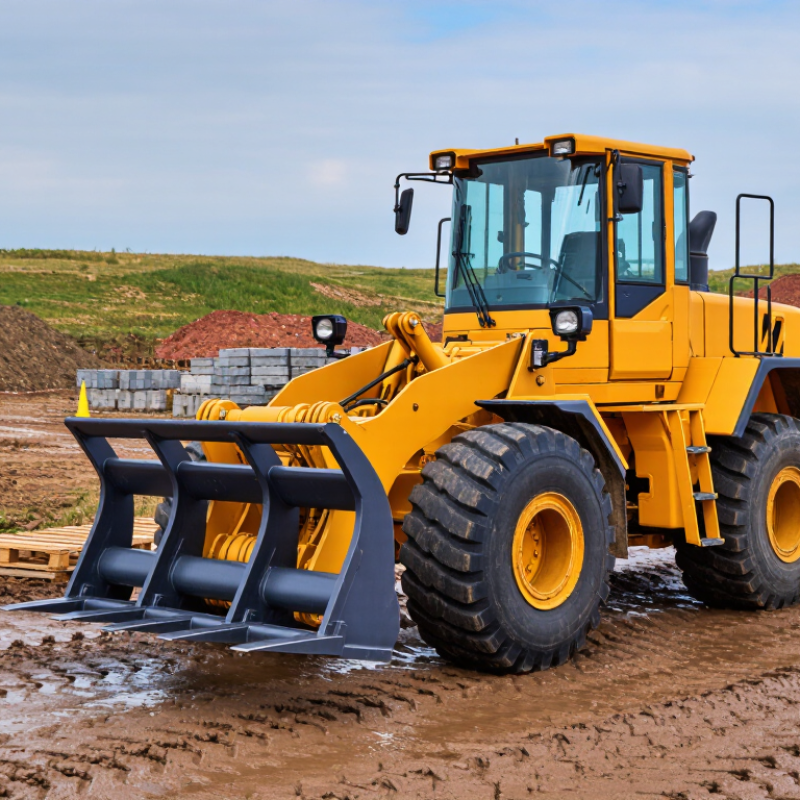
China’s all-terrain forklift market serves construction, agriculture, timber, and uneven logistics yards. The 2–10 t capacity range covers compact site work and heavy pallet handling. The range is broad. A 2 t machine may prioritize maneuverability, while a 10 t model needs stronger axles and braking control.
Research and Markets’ 2024 rough-terrain forklift analysis indicates steady global growth, near 5% annually through the decade. China’s Industrial Vehicle Association reported about 1.17 million forklift sales in 2023, with exports approaching 300,000 units. These figures cover multiple forklift categories, not only all-terrain models. That distinction matters. Buyers should request model-level production and export records.
Four-wheel drive remains central in this segment. Mechanical 4WD systems often suit muddy yards and simple maintenance conditions. Hydrostatic drives can provide smoother speed control on slopes. Buyers should inspect ground clearance, axle oscillation, differential locking, tire size, and rated capacity on uneven surfaces. A 5 t rating on flat concrete does not guarantee 5 t performance on loose soil. Not always.
Practical evaluation should include a cold start, ramp test, turning test, and load test. ISO-compliant documentation, traceable serial numbers, operator manuals, and spare-parts support improve supplier reliability. I would also check hydraulic temperature after continuous lifting. Catalog data can look impressive. Field evidence is harder to fake.
| Rated Capacity | Typical Load Centre | Common Engine Power Range | Drive Configuration | Ground Clearance | Typical Gradeability | Common Lift Height Options | Tyre Configuration | Typical Applications |
|---|---|---|---|---|---|---|---|---|
| 2.0 t | 500 mm | 35–45 kW | 4WD Hydrostatic or torque-converter transmission |
220–280 mm | 25–30% | 3.0–4.5 m | Industrial pneumatic tyres; optional agricultural tread | Small construction sites, farms, landscape projects and rural warehouses |
| 2.5–3.0 t | 500 mm | 45–55 kW | 4WD Selectable two-wheel/ four-wheel steering on some configurations |
240–300 mm | 25–35% | 3.0–5.0 m | Air-filled or solid pneumatic tyres | Building-material handling, timber yards, agricultural loading and outdoor logistics |
| 3.5–4.0 t | 500–600 mm | 55–70 kW | 4WD Heavy-duty axles with differential lock options |
260–320 mm | 25–35% | 3.0–5.5 m | Large pneumatic tyres with deep-tread options | Brick and block handling, ports, stone yards and uneven industrial surfaces |
| 5.0 t | 600 mm | 70–90 kW | 4WD Hydraulic or powershift transmission |
280–350 mm | 20–30% | 3.0–6.0 m | Heavy-duty pneumatic tyres; solid tyres available for abrasive sites | Steel service areas, container handling support, construction materials and heavy pallets |
| 6.0–7.0 t | 600–900 mm | 90–120 kW | 4WD Heavy-duty torque-converter or powershift system |
300–380 mm | 20–30% | 3.0–6.0 m | Wide pneumatic tyres with reinforced sidewalls | Foundries, timber processing, port-side yards, precast concrete and bulk materials |
| 8.0–10.0 t | 900–1,200 mm | 120–175 kW | 4WD Heavy-duty axles, wet-disc brakes and powershift transmission |
320–420 mm | 15–25% | 3.0–6.0 m | Large pneumatic or solid tyres, depending on surface conditions | Steel coils, oversized loads, heavy manufacturing, ports and demanding outdoor yards |
It means the forklift can climb 20–30 metres over a 100-metre distance. The test may use an empty or loaded machine. Ask for the load, slope length, surface, tyres, and load position. A clean number can still mislead.
Not always. Wet gravel, heavy loads, and sharp slopes can reduce practical performance. The forklift should be tested on the actual worksite. Controlled ramp operation is essential. Do not turn across a slope.
Many buyers consider approximately 250–350 millimetres suitable for uneven yards. Higher clearance helps avoid underbody impacts. However, it can raise the centre of gravity. More clearance is not automatically safer.
A three-to-six-metre lift height suits many general applications. Higher masts may reduce capacity at maximum extension. Request the load chart at full lift. The advertised height is only part of the story.
Request current quality certificates, audit dates, factory scope, and corrective-action records. Also check the declaration of conformity and technical documentation. Serial-number traceability is useful. Paperwork is not reality.
Inspect welds, hydraulic systems, brakes, steering, and visibility. Request a cold-start demonstration when possible. Review emergency controls, guarding, and operator instructions. A polished factory tour may still miss weaknesses.
Include purchase price, fuel, tyres, planned maintenance, repairs, warranty exclusions, and resale value. A four-tonne machine may use about 1.6 gallons hourly. At 1,500 hours annually, fuel costs can exceed 10,000 dollars. Local prices matter.
Rough aggregate can wear pneumatic tyres sooner than expected. Budget for two tyre changes over five years. Include fitting and transport charges. Neglected servicing becomes expensive.
No. Check coverage for labour, travel, hydraulics, and downtime. Severe-site damage may be excluded. Missing service records can also void coverage. The cheaper machine may lose after one transmission repair.
China’s All Terrain Forklift market offers global buyers a broad range of 2–10 ton models equipped with four-wheel-drive systems for construction sites, farms, warehouses, and uneven outdoor work areas. When comparing options, buyers should examine gradeability of around 20–30%, ground clearance, lift height, turning performance, stability, fuel efficiency, and operator safety. These specifications should match the terrain, load profile, climate, and daily operating hours of the intended application.
A reliable supplier should provide clear documentation for ISO 9001 quality management, CE marking, EN 1175 electrical safety where applicable, and ISO 3691-1 industrial truck safety requirements. Export readiness also includes accurate HS Code 8427 classification, suitable Incoterms, realistic lead times, quality inspections, manuals, and dependable spare-parts support. Beyond the purchase price, buyers should compare five-year total cost of ownership, including fuel, tires, scheduled maintenance, warranty coverage, repairs, and downtime. A complete evaluation helps international customers select equipment that delivers safe, predictable, and cost-effective performance.
