
Wings
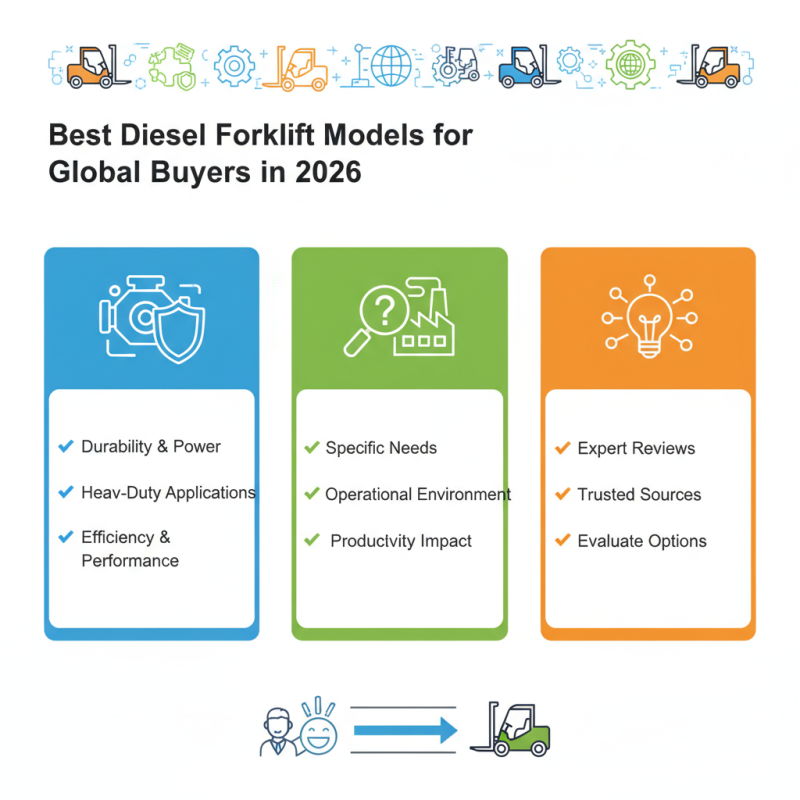
When considering the best diesel forklift models for 2026, global buyers face a multitude of options. Diesel forklifts are renowned for their durability and power, making them ideal for heavy-duty applications. Buyers should focus on models that offer efficiency and maintain best performance.
In this evolving market, understanding specific needs is crucial. Each business has unique requirements based on the operational environment. Selecting the right diesel forklift can impact productivity significantly. Researching various brands and models is a vital step.
However, not all information online is reliable. It's essential to seek expert reviews and trusted sources. Some models might be advertised as top-tier, yet they may disappoint in real-world scenarios. It's a landscape that requires careful navigation. By taking the time to evaluate options, buyers can find a diesel forklift that truly meets their needs.
Diesel forklifts have become a top choice for many industries due to their strength and reliability. They perform well in tough environments. Their powerful engines make lifting heavy loads easier. Businesses often use them in warehouses or construction sites where durability is key. The ability to work long hours without the need for frequent recharging is a significant advantage. However, they require regular maintenance to keep running smoothly.
Another aspect to consider is the environmental impact of diesel forklifts. While they excel in power, they can produce higher emissions compared to electric models. This raises questions about sustainability in the long term. Yet, industries that prioritize power and operational efficiency often find the benefits outweigh the drawbacks. Users must reflect on their needs and evaluate whether the advantages align with their operational goals. Understanding both sides helps in making informed decisions.
When selecting a diesel forklift, it's crucial to consider various features that impact performance and efficiency. Engine capacity should match your load requirements. Diesel forklifts typically feature engines ranging from 1.8 to 3.5 liters, providing adequate power for heavy lifting. According to the latest industry insights, models with higher torque ratings can enhance acceleration and overall productivity.
Another important feature is fuel efficiency. Diesel forklifts are known for their impressive fuel economy, often achieving up to 30% better fuel consumption compared to electric models under similar conditions. This translates to lower operational costs over time, especially for businesses with heavy-duty applications.
**Tips**: Look for models offering advanced emission control systems. These features not only meet environmental regulations but also improve operational efficiency.
Additionally, consider the lifting height and capacity. Models offering flexible mast options can adapt to various warehouse requirements. Many buyers overlook the importance of maintenance considerations. A solid maintenance schedule can prolong the lifespan and reliability of your diesel forklift.
In 2026, the diesel forklift market showcases a variety of robust models, each catering to specific operational needs. These machines excel in heavy-duty applications, providing efficiency and reliability. A key feature to look for is lifting capacity, which can range widely across different models. Additionally, the fuel efficiency of these forklifts has improved, making them more environmentally friendly.
Comparing models shows notable differences in ergonomics and usability. Some have advanced operator controls that enhance comfort during long shifts. On the other hand, certain models may lack in visibility, which can hinder productivity. Regular maintenance is essential for ensuring long-lasting performance. Buyers should consider their operational requirements carefully.
Another vital aspect is durability and build quality. Heavy-duty construction ensures these forklifts withstand harsh work environments. However, potential buyers should be cautious of overly complex systems that may complicate repairs. Over time, some features may turn out to be less useful than initially thought. Understanding the pros and cons helps in making informed choices.
| Model | Load Capacity (lbs) | Lift Height (in) | Fuel Efficiency (mpg) | Price Range (USD) |
|---|---|---|---|---|
| Model A | 5,000 | 120 | 15 | $25,000 - $30,000 |
| Model B | 6,000 | 130 | 16 | $28,000 - $33,000 |
| Model C | 7,000 | 140 | 14 | $30,000 - $36,000 |
| Model D | 8,000 | 150 | 13 | $35,000 - $40,000 |
| Model E | 9,000 | 160 | 12 | $40,000 - $45,000 |
The diesel forklift sector is undergoing significant transformation. Innovations focus on enhancing efficiency and reducing emissions. Recent developments prioritize cleaner engines and improved fuel management systems. These advancements seek to maintain high performance while adhering to stricter environmental regulations.
Market trends indicate a growing interest in hybrid technology. Some manufacturers are exploring integration with electric systems. This approach aims to balance power and sustainability. Buyers are increasingly concerned about operational costs and eco-friendliness. These factors drive the innovation cycle in the diesel forklift market.
However, the transition to advanced technology has challenges. Many operators may not be familiar with new systems. Training is essential for seamless integration. Additionally, the upfront costs may deter some buyers. The focus should also be on long-term savings, not just initial investments. Overall, the industry is moving towards efficiency, but hurdles remain.
When selecting the right diesel forklift, consider your operational needs. Understand the lifting capacity, fuel efficiency, and engine power required for your tasks. Many models vary widely in their specifications. It is crucial to match the forklift’s capabilities with the demands of your warehouse or construction site.
Another important factor is the terrain on which the forklift will operate. If you are working on uneven ground, ensure that the model offers excellent stability. Check the size and weight of the forklift. The dimensions will impact maneuverability in tight spaces. Safety features shouldn't be overlooked. Look for options with good visibility and reliable braking systems.
Before making a decision, seek reviews from other users. Gather insights about their experiences. Real-world feedback can reveal strengths and weaknesses that specifications might not cover. The process can be complex, requiring reflection on your specific needs and the demands of your environment. Take the time to weigh your options carefully.
: Diesel forklifts are strong and reliable. They excel in tough environments and can lift heavy loads easily.
They are often used in warehouses and construction sites. Durability is key in these settings.
They can work long hours without frequent recharging. This makes them efficient for extended operations.
They produce higher emissions compared to electric models. This raises sustainability questions over the long term.
There is a focus on enhancing efficiency and reducing emissions. New innovations prioritize cleaner engines and fuel management systems.
Training is essential for new systems. High upfront costs can also deter some buyers from making the switch.
Buyers should assess lifting capacity, fuel efficiency, and terrain. Safety features and dimensions are also important.
User feedback provides insights into strengths and weaknesses of models. Real-world experiences can guide your decision.
Consider your specific needs and the demands of your working environment. It's crucial to weigh options carefully.
Yes, the process can be complex. It requires careful consideration of operational requirements and site demands.
The article titled "2026 Best Diesel Forklift Models for Global Buyers" provides a comprehensive overview of diesel forklifts, highlighting their advantages and diverse applications across various industries. It delves into key features to consider when selecting a diesel forklift, such as load capacity, fuel efficiency, and maintenance requirements, ensuring buyers can make informed decisions tailored to their operational needs.
In addition, the article offers a comparative analysis of the top diesel forklift models of 2026, showcasing advancements in technology and design, driven by current market trends. It emphasizes innovations that enhance performance and sustainability, making diesel forklifts a relevant choice in today’s competitive landscape. Furthermore, a buying guide is included to assist global buyers in selecting the right diesel forklift that aligns with their requirements, ultimately contributing to increased productivity and efficiency in various applications.
