
Wings Wings

7 Gas Forklift Buying Tips for Global Buyers

Time:2026-11-20 Author:Madeline
0%

Gas Forklifts can be a practical choice for busy yards, loading docks, and operations that need quick refueling. Their suitability depends on more than the purchase price. A forklift that handles pallets smoothly on a level warehouse floor may struggle on uneven outdoor ground. Buyers should compare rated capacity, lift height, turning radius, tire type, and expected hours of daily use. Check the actual load, too: attachments can change a truck’s capacity. Small details matter.

Global buyers also need to consider fuel availability, local operating conditions, and service support. Ask whether trained technicians and common replacement parts are accessible near the worksite. In hot, dusty, or humid environments, maintenance intervals and protective features deserve close attention. A spreadsheet helps, but it cannot predict every delay or operator preference. That takes checking. Request a complete specification sheet, clarify warranty coverage, and confirm that quoted performance figures match the intended configuration. Compare fuel use and maintenance needs over the expected ownership period, not only the initial cost. The best choice is not always the newest or largest model. It is the one that fits the job, site, budget, and support network—with enough capacity for real loads, but not unnecessary expense. These seven buying tips provide a clear framework for evaluating suppliers and narrowing options, while leaving room to verify assumptions before placing an order.
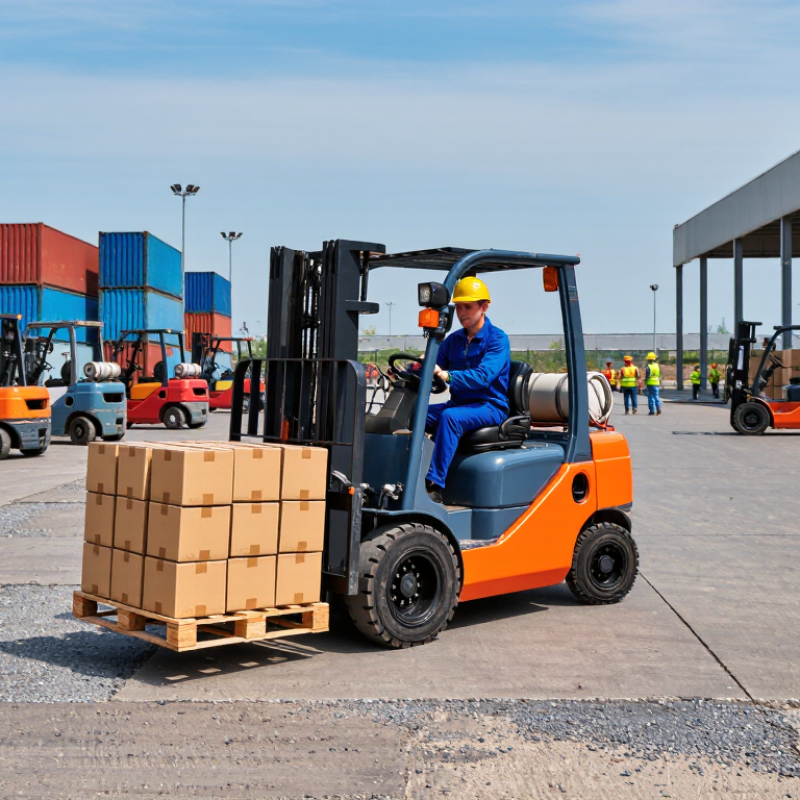
7 Gas Forklift Buying Tips for Global Buyers

Define Your Load, Lift Height, and Daily Operating Requirements

Before comparing gas forklifts, record the heaviest load, its dimensions, and where its weight sits. A 2,000-kilogram pallet may exceed a truck’s safe capacity if the load is long or uneven. Measure it. Check the capacity plate at the intended load center, not just the headline rating. OSHA’s powered industrial truck standard requires capacity information to reflect attachments and load conditions; confirm the plate matches the truck’s actual setup.

Lift height matters in real aisles. Measure the highest rack beam, then allow clearance for the mast, load, and overhead obstacles. Note the lowest doorway too. OSHA estimates forklifts are involved in about 85 workplace fatalities and 34,900 serious injuries each year, underscoring why capacity and visibility checks are not paperwork. These figures appear in OSHA’s powered industrial truck safety materials.

Track daily operating hours, peak shifts, travel distances, and time spent idling. A truck moving pallets for one short shift has different needs from one working repeated, loaded cycles across a busy yard. Record typical and peak loads for several days; memory tends to favor the easy jobs. Include surface conditions, ramps, indoor ventilation, and refuelling access. Gas models can suit mixed indoor-outdoor work, but ventilation and exhaust exposure need careful review against site conditions. Use these observations to specify capacity, lift height, mast type, and duty cycle before requesting quotations.

Compare Engine Performance, Fuel Consumption, and Emissions

When comparing gas forklifts, match engine power to the work cycle, not just the rated horsepower. A truck lifting a 2-ton pallet onto a high rack needs steady torque and cooling during repeated lifts. Ask suppliers for fuel use under a comparable load cycle, expressed in litres per operating hour. A single idle-heavy demonstration can make consumption look unusually low. Real shifts are messier.

For propane models, convert fuel use into emissions before comparing quotes. The U.S. Energy Information Administration’s Carbon Dioxide Emissions Coefficients assigns propane about 5.75 kg of CO₂ per U.S. gallon burned. At 1.5 gallons per hour, that is roughly 8.6 kg of direct CO₂ per operating hour. This estimate covers combustion only, not fuel production or delivery. Small difference? Across two shifts, it adds up.

CO₂ is not the whole picture. The U.S. Environmental Protection Agency’s nonroad spark-ignition engine standards address pollutants including hydrocarbons, nitrogen oxides, and carbon monoxide. Request the engine family’s certification details, then check how emissions controls perform under your expected workload. Compare cold starts, ventilation needs, and maintenance intervals, too. An older engine may consume more fuel or emit more pollutants when poorly tuned. Paper figures help, but verify them with a loaded site trial.

Match the Mast, Tires, and Attachments to Your Worksite

A gas forklift can look suitable on paper and still struggle at your site. Start with the mast. Measure the highest shelf, doorway clearance, and overhead obstructions, then compare them with the forklift’s lowered and raised mast heights. Check capacity at your real lift height and load center, not just the headline rating. A long load can shift the balance more than expected. Measure twice.

Tips: Choose a three-stage mast when you need extra lift height but have low doorways. For open yards, pneumatic tires usually handle uneven ground better. Solid tires can suit smoother floors and reduce puncture worries, but may feel harsher over bumps. Confirm tire type against the actual surface; “mostly indoors” can hide a rough loading apron.

Match attachments to the loads you move every day. Side shifters help align pallets without repeated repositioning, while fork positioners can save time when pallet widths vary. Ask how each attachment changes rated capacity, visibility, and overall width. Test the planned setup with a representative load, if possible. It is easy to overlook a tight turning aisle until the truck arrives. Keep a little space for real-world mess: pallets are not always centered, and floors are rarely perfect.

Assess Safety Features, Operator Comfort, and Maintenance Access

When comparing gas forklifts, test visibility from the seat, not just from the showroom floor. Check the overhead guard, mirrors, lights, seat belt, and warning alarms. OSHA’s Powered Industrial Trucks guidance cites approximately 85 forklift-related deaths and 34,900 serious injuries each year in the United States. These figures make clear why safety features deserve close inspection. Ask the supplier to demonstrate how the truck handles a tight turn with a raised load.

Comfort matters over a full shift. Adjust the seat, climb in, and reach every control without leaning forward. Notice vibration, pedal effort, and whether the mast blocks the operator’s view. Small annoyances add up. I would not judge comfort from a brief showroom sit; a loaded test drive is more revealing, though buyers do not always get one.

Maintenance access affects uptime. Open the engine compartment and check whether technicians can reach filters, belts, coolant, and oil points without awkwardly removing panels. Ask to see the routine inspection steps and typical service intervals in the maintenance manual. Gas engines also produce exhaust, so consider where the truck will operate and whether ventilation is adequate. A clean-looking machine can still be frustrating to service.

Confirm Supplier Support, Warranty Coverage, and Total Ownership Cost

A gas forklift’s purchase price is only the opening figure. Ask the supplier to itemize scheduled servicing, parts, labor, call-out fees, and travel charges. Confirm whether the warranty covers the engine, transmission, mast, and hydraulic components, and whether wear parts are excluded. Get response times in writing. “Local support” can mean very different things when a truck is stopped beside a loading dock.

Check service coverage against your actual shift pattern. OSHA estimates that powered industrial trucks are involved in about 85 work-related deaths and 34,900 serious injuries each year in the United States. That figure does not prove that a service contract prevents incidents, but it underlines why competent maintenance and prompt repairs matter. Ask how technicians are trained, which parts are stocked locally, and what happens after hours. Specific answers are better.

Build a five-year ownership estimate using your expected annual hours, fuel use, planned maintenance, tires, and likely downtime. Compare the same assumptions across suppliers. A low quote may omit travel or consumables; a generous warranty may still require approved servicing. Request sample invoices and a written warranty claim process. Then test the estimate against a busy month. Real costs can surprise you. I would not treat any forecast as exact; operating conditions and repair frequency vary.

FAQS

What should I measure before choosing a gas forklift?

Record your heaviest load, its dimensions, and where its weight sits. A long or uneven pallet can reduce safe capacity. Measure it.

How do I check whether the forklift can reach my racks?

Measure the highest rack beam and the lowest doorway. Allow clearance for the mast, load, and overhead obstacles. Check the capacity plate for your actual load and attachments.

What operating details should I track?

Note daily hours, peak shifts, travel distances, idling, and typical loads. Include ramps, surface conditions, indoor ventilation, and refuelling access. Memory can be unreliable.

Which safety features should I inspect?

Check visibility from the seat, overhead guard, mirrors, lights, seat belt, and warning alarms. Ask for a demonstration of a tight turn with a raised load.

How can I judge operator comfort?

Adjust the seat and reach every control. Notice vibration, pedal effort, and whether the mast blocks your view. Small annoyances add up. A loaded test drive is more revealing than a quick showroom sit.

What maintenance access should I check?

Open the engine compartment. See whether technicians can reach filters, belts, coolant, and oil points without awkward panel removal. Ask to review routine inspection steps and service intervals.

What should I ask about supplier support and warranty?

Request written response times and itemized service costs. Confirm coverage for the engine, transmission, mast, and hydraulics. Ask which wear parts are excluded and what happens after hours.

How do I compare the total ownership cost?

Estimate five years of fuel, servicing, tires, labor, and downtime using the same assumptions for each supplier. Request sample invoices and a written warranty claim process. Forecasts are never exact.

Conclusion

Choosing the right Gas Forklifts begins with a clear understanding of the work they will perform. Define the typical and maximum load, required lift height, operating hours, and conditions at your site. Then compare engine power, fuel use, and emissions against your productivity needs and operating budget. The goal is to select a forklift that can handle daily tasks reliably without paying for capacity or performance you do not need.

Next, match the mast, tires, and attachments to your floors, surfaces, and materials. Consider safety features, visibility, operator comfort, and how easily technicians can reach key service points. Before making a decision, review the supplier’s support, warranty coverage, parts availability, and maintenance arrangements. Comparing these factors alongside purchase price gives you a clearer picture of total ownership cost and helps ensure your forklift remains productive over time.

Madeline

Madeline

Madeline is a dedicated marketing professional with a wealth of expertise in our company's core offerings. With a keen understanding of the industry, she brings a unique perspective to her role, consistently delivering high-quality content that highlights the superior aspects of our products. As......