 Wings
Wings
Wings
Wings
Choosing the right Agricultural Forklift can shape daily productivity, operator safety, and long-term operating costs. A machine that looks powerful in a showroom may struggle on wet soil, narrow lanes, or uneven loading areas. Small details matter. Tire design, ground clearance, turning radius, lift capacity, and mast visibility should match the actual farm environment. A 2,500-kilogram capacity may sound sufficient, yet capacity often decreases when loads extend forward or rise higher. That detail is easy to overlook.
Practical experience shows that farmers should inspect more than engine power. Consider pallet dimensions, trailer heights, storage surfaces, seasonal workload, and available maintenance support. Diesel, electric, and rough-terrain models each offer distinct advantages. Electric units can reduce indoor fumes, while diesel machines may suit long outdoor shifts and remote locations. Not every model fits. Ask dealers for documented load charts, service schedules, warranty terms, and operator training options. A supervised test drive can reveal blind spots, unstable handling, or uncomfortable controls before purchase. Measure twice. Reliable selection also requires honest reflection. A familiar brand may not be the best match, and a low purchase price can hide tire, fuel, or repair expenses. The best Agricultural Forklift is not simply the strongest machine. It is the safest, most serviceable, and most suitable choice for the farm’s real conditions. Decisions should rely on verified specifications, qualified advice, and careful observation rather than attractive claims.
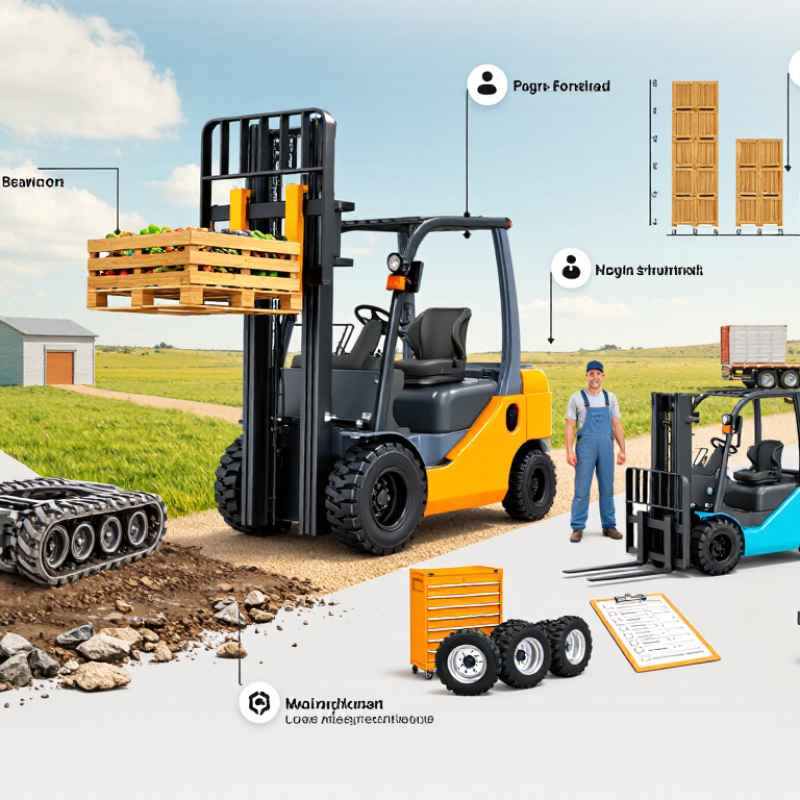
An agricultural forklift should match the work, not just the lifting capacity. Start by listing daily tasks: moving feed bags, loading pallets, stacking hay, clearing manure, or carrying water tanks. Record the heaviest load and its dimensions. Then check the load center, because a long or uneven load reduces safe capacity. Use the rated load chart, not the advertised maximum. A forklift that lifts well indoors may struggle beside a full barn.
Terrain often decides the correct configuration. Inspect muddy lanes, gravel yards, sloped fields, and wet concrete after rain. Measure narrow gates and turning areas. Rough ground may require greater ground clearance, suitable tires, and stronger suspension. Slopes need careful attention to stability and braking. A compact machine can turn easily, but limited clearance may cause repeated impacts underneath. That detail is easy to miss.
Test the forklift on the actual route before purchasing. Place a typical load on the forks and drive slowly across the worst section. Watch for wheel spin, mast movement, poor visibility, and awkward reversing. Keep people away from the test area. Operator feedback matters, especially from workers who use the machine daily. A paper estimate can be wrong. Even experienced teams sometimes overlook seasonal changes, such as soft soil after irrigation. Recheck the route when conditions change.
List daily jobs, including feed bags, hay, pallets, manure, and water tanks. Record the heaviest load and its dimensions. Use the rated load chart, not the advertised maximum. My estimate could still be wrong.
A long or uneven load reduces safe lifting capacity. A full hay bale may extend beyond the fork tips. Check the load center before stacking or driving.
Check muddy lanes, gravel yards, sloped fields, and wet concrete. Measure narrow gates and turning spaces. Rough ground may require stronger suspension, suitable tires, and greater clearance. Small obstacles can cause repeated impacts underneath.
Yes. Place a typical load on the forks and drive slowly across the worst section. Watch for wheel spin, mast movement, poor visibility, and difficult reversing. Keep people away. A paper estimate is not enough.
Electric power suits barns, packing rooms, and short routes. It produces no exhaust at the point of use and operates quietly near livestock. Charging time and battery replacement still affect costs. Quiet does not mean effortless.
Diesel can suit muddy yards, wet soil, and long outdoor shifts. It remains useful when charging stations are distant. Estimate fuel costs using local prices and seasonal changes. Cold mornings can also reduce battery performance.
Proper ventilation remains essential for fuel-burning equipment. Check airflow before working inside enclosed areas. Never treat cleaner indoor operation as risk-free. That assumption needs challenging.
Look for an overhead guard, seat belt, clear sightlines, effective brakes, lighting, and a useful reverse alarm. Test them in the real yard. Dust, rain, and background noise can reduce alarm effectiveness.
Test the seat, controls, vibration, and three-point entry while wearing work boots. Drive over rough ground for more than ten minutes. Daily checks should reach tires, forks, chains, fluids, lights, and leaks safely. If inspections feel awkward, repairs may be delayed.
Choosing the best Agricultural Forklift starts with understanding the daily tasks, ground conditions, and work areas on your farm. Consider whether it will operate on uneven fields, muddy surfaces, narrow storage spaces, or paved facilities. Its load capacity and lift height should safely match the materials you handle, while compatible attachments can improve flexibility for pallets, feed, hay, or other farm supplies.
The power source should suit your operating environment, available fuel or charging facilities, expected working hours, and long-term costs. Safety features such as stability controls, clear visibility, reliable braking, and comfortable operator controls are essential for productive use. Easy access to service points can reduce downtime and simplify routine maintenance. Before making a final decision, compare the complete ownership cost, including purchase price, energy use, maintenance, training, attachments, and expected service life. A well-matched Agricultural Forklift can improve efficiency, safety, and daily handling performance across changing farm conditions.
