 Wings
Wings
Wings
Wings
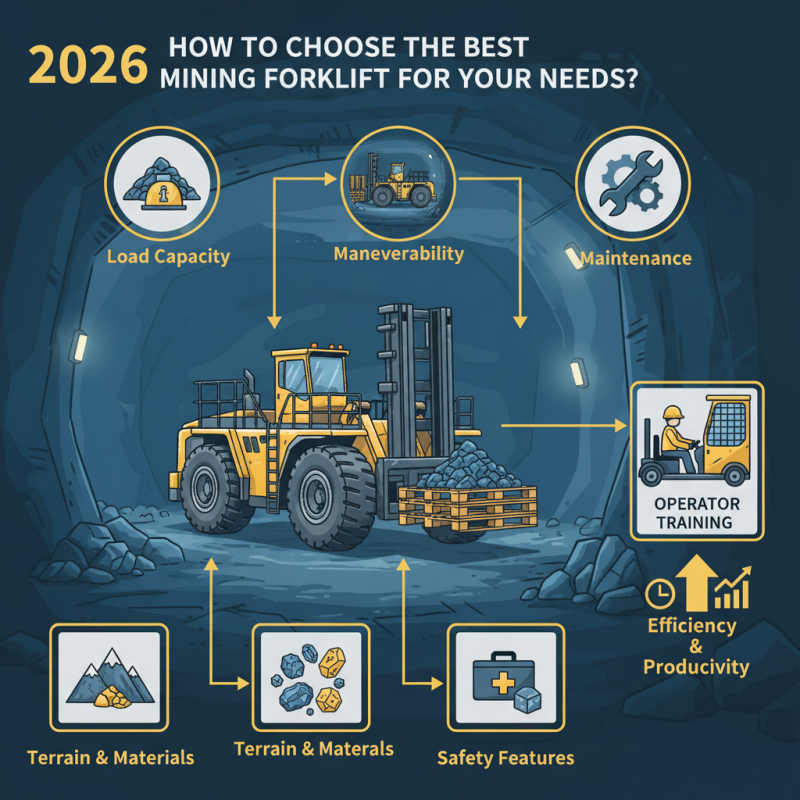
Choosing the right Mining Forklift can significantly impact your operations. These specialized vehicles are designed for tough environments and heavy loads. Factors like load capacity, maneuverability, and maintenance play critical roles in making the best choice.
When picking a Mining Forklift, consider the specific tasks you will perform. Different models suit different applications. The terrain, type of materials, and working conditions matter. Ensuring the forklift can navigate rugged landscapes is essential. Also, think about safety features; they can prevent accidents in hazardous environments.
It's easy to overlook small details. Failing to assess your unique requirements can lead to costly mistakes. Many businesses underestimate the importance of operator training and equipment familiarity. Investing in the right Mining Forklift can enhance efficiency and productivity in the long run.
Mining forklifts are specialized vehicles designed for heavy-duty tasks in challenging environments. When selecting one, understanding key features and specifications is vital. A robust lifting capacity ensures that the forklift can handle substantial loads, which is crucial in mining operations. The height of the lift also matters; higher capacities can improve efficiency but may require additional training to operate safely.
Another important aspect is the type of drive system. Internal combustion engines provide power but can emit harmful gases. Electric forklifts, while cleaner, may have limited run time. Battery life and recharge time play a significant role in daily operations. Additionally, the terrain where the forklift will operate is a consideration. Heavy-duty tires can enhance traction on rocky surfaces, reducing accidents.
Safety features should never be overlooked. Seat belts, stability controls, and visibility enhancements can safeguard operators in unpredictable environments. However, even the best safety measures can’t guarantee total security. Operators must receive thorough training to navigate potential hazards. Understanding both the capabilities and limitations of mining forklifts leads to better decisions tailored to specific needs.
| Feature | Specification | Importance |
|---|---|---|
| Load Capacity | Up to 12,000 lbs | Crucial for moving heavy materials |
| Lift Height | Up to 20 ft | Necessary for stacking in high places |
| Fuel Type | Diesel/Electric | Determines operational cost and environmental impact |
| Mast Type | Single/Triple Stage | Affects visibility and load stability |
| Tire Type | Solid/Pneumatic | Influences traction and terrain capability |
| Turning Radius | Minimum 72 inches | Crucial for maneuverability in tight spaces |
| Safety Features | Seatbelts, Overload Sensors | Essential for operator safety |
| Maintenance Interval | Every 500 hours | Affects overall reliability |
: Evaluate weight capacities and terrain types. Ensure the forklift meets weight demands and can navigate rough surfaces.
It's crucial to handle heavy loads safely. Underestimating this may lead to equipment failures or accidents.
Uneven ground requires forklifts with stability features and better traction. This ensures safe navigation in rough conditions.
Consult industry experts and test equipment on-site. This ensures you make informed choices based on real-world performance.
Overloading can create dangerous situations. It may lead to accidents and decreased operational efficiency.
Assess required lift heights and work area dimensions. Compare these with the forklift's capabilities for a proper fit.
Yes, proper training is essential to handle specific designs safely and prevent accidents.
Maintenance prevents equipment failure and enhances performance. Neglect can lead to increased risks during operations.
Ensure the forklift can navigate tight spaces effectively. This is vital for efficiency in operations.
It highlights any oversights and leads to better decision-making for future equipment choices.
When selecting the best Mining Forklift for your operations, it is crucial to understand the key features and specifications that these machines offer. Assess your mining operations by considering important factors such as weight and terrain, ensuring you choose a forklift that can handle the specific demands of your site. Matching the capacity of the forklift to your needs is essential, as it impacts both efficiency and safety.
Additionally, evaluating safety features will help ensure compliance with industry regulations while protecting operators. Finally, budgeting for your purchase should include a thorough consideration of costs and potential financing options to secure the best deal. By taking these steps, you can make an informed decision and select the optimal Mining Forklift that enhances productivity and safety within your mining operations.
