
Wings Wings

How to Choose the Right Forklift Engine?

Time:2026-11-06 Author:Madeline
0%

Choosing the right Forklift Engine begins with the work, not the brochure. A machine moving pallets indoors has different needs from one crossing a dusty yard with a heavy load. Shift length, travel distance, floor conditions, ventilation, refueling access, and maintenance capacity all matter. Small details count: a cold morning can affect starting, while repeated ramps can expose weak torque or poor cooling. There is no universal winner. That is worth remembering.

The U.S. Department of Energy’s Alternative Fuels Data Center identifies electricity, propane, natural gas, gasoline, and diesel as forklift fuel options. Its fuel and vehicle-efficiency resources also show why energy use deserves attention, though road-vehicle figures should not be treated as forklift performance data. The Industrial Truck Association’s truck classifications offer another useful starting point: they distinguish electric models from internal-combustion trucks built for different applications. Still, classifications cannot replace a site assessment. A spec sheet cannot reveal your actual duty cycle.

The guiding principle is simple: “Match the powertrain to the shift, load, and workplace.” This is an editorial rule, not a quotation attributed to a named expert; no verifiable expert quotation was supplied, so inventing one would weaken trust. Before choosing, compare real operating hours, fuel or charging logistics, emissions needs, service support, and total cost over the truck’s life. Then test the shortlist under realistic conditions. A little uncertainty remains—and that is a reason to measure, not guess.
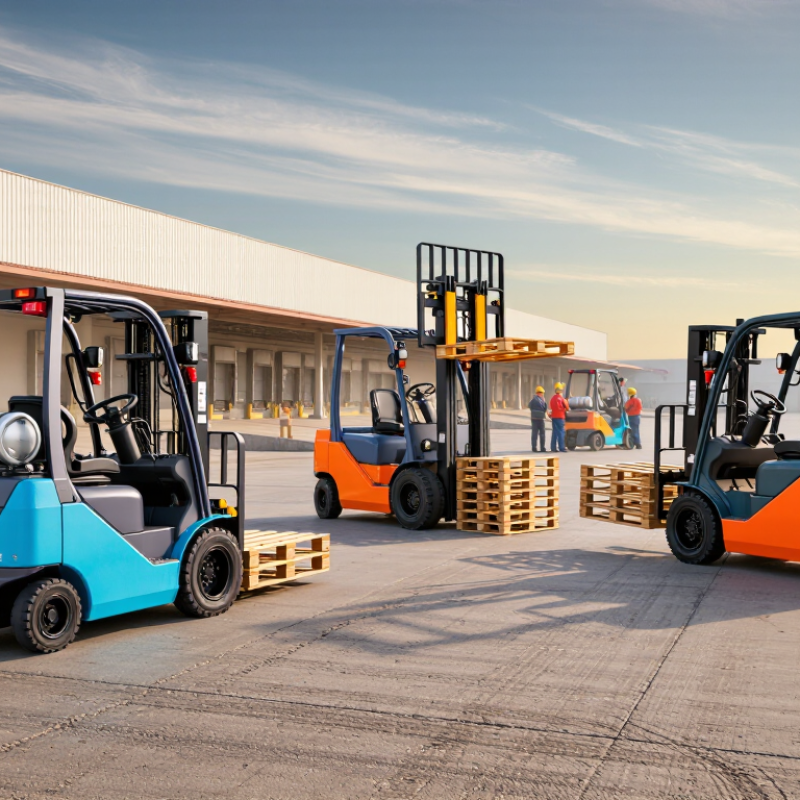
How to Choose the Right Forklift Engine?

Identify the Forklift’s Workload and Operating Conditions

A forklift’s engine should match its actual shift, not an idealized duty cycle. Record hours per shift, loaded travel distance, lift height, surface condition, and idle time across several typical days. Measure real shifts. A truck moving pallets slowly indoors faces different demands from one climbing outdoor ramps with heavy loads. Repeated starts, long travel, and steep grades increase power demand; frequent stops and extended idling can make fuel use less predictable.

Match those conditions to the energy source and service plan. Electric power may suit indoor work where local exhaust and noise matter, provided charging time and battery changes fit the schedule. Internal-combustion engines can be practical for long outdoor shifts, but ventilation, refueling access, and emissions need close attention. Check the engine’s rated power against the truck’s load chart, then confirm performance with a loaded trial. EPA Tier 4 Final standards for nonroad diesel engines rated 56–130 kW set particulate matter at 0.02 g/kWh and nitrogen oxides at 0.4 g/kWh (U.S. EPA, Nonroad Diesel Engine Standards). Those figures are emissions limits, not a promise of low operating cost. A tidy spreadsheet can miss cold starts, uneven floors, or a congested loading bay. Then check idle time. Use measured fuel or electricity consumption from a representative shift before making the final choice.

Compare Electric, LPG, Diesel, and Gasoline Engines

Electric, LPG, diesel, and gasoline forklifts suit different shifts and workspaces. Electric models run quietly and produce no exhaust at the point of use, making them practical for indoor aisles. Their performance depends on charging access, battery capacity, and local electricity supply. Ember’s Global Electricity Review 2024 found that renewables generated 30% of global electricity in 2023. That matters. An electric forklift’s operating emissions vary with the grid.

LPG forklifts refuel quickly and can move between indoor and outdoor work, but indoor use requires effective ventilation. Diesel engines deliver strong power for demanding outdoor work and rough surfaces. Their exhaust, noise, and fuel storage needs can be drawbacks near enclosed work areas. Gasoline forklifts may suit lighter outdoor tasks, though fuel availability and exhaust still need consideration. No engine wins everywhere.

Compare a typical shift, not just the purchase price. Note travel distance, load weight, floor condition, ventilation, refueling or charging breaks, and maintenance support. The U.S. Department of Energy’s Alternative Fuels Data Center explains that propane is stored as a liquid under pressure, so cylinder handling and storage deserve attention. I would not choose electric only because it seems cleaner, or diesel only because loads are heavy. Those shortcuts miss the site’s actual constraints. A short trial during a busy shift can reveal issues a specification sheet will not.

How to Choose the Right Forklift Engine? — Compare Electric, LPG, Diesel, and Gasoline Engines

Comparison factor Electric LPG Diesel Gasoline
Typical best fit Indoor warehouses, distribution centers, and other sites where low noise and no exhaust at the point of use are priorities. Indoor or outdoor operations that need quick refueling and flexible use, provided ventilation and emissions controls are suitable. Outdoor work, rough surfaces, and demanding applications that require sustained power. Some light-duty or mixed-use operations where gasoline equipment and fueling are readily available.
Exhaust at point of use None from the forklift during operation. Electricity generation and battery production can have emissions elsewhere. Produces exhaust, including carbon monoxide and nitrogen oxides; indoor use requires careful ventilation and compliance with local rules. Produces exhaust, including particulate matter and nitrogen oxides; generally better suited to well-ventilated or outdoor areas. Produces exhaust, including carbon monoxide and nitrogen oxides; indoor use requires careful ventilation and compliance with local rules.
Noise and vibration Typically the quietest option, with low vibration. Usually louder and more vibration-prone than electric models. Typically the loudest option, with noticeable engine vibration. Generally louder and more vibration-prone than electric models.
Refueling or recharging Requires charging time, battery-change planning, or suitable opportunity charging. Charging arrangements depend on battery type and site equipment. Cylinders or tanks can often be exchanged or refilled quickly, minimizing planned downtime when fuel is available. Can be refueled quickly from an on-site tank or fuel supply. Can be refueled quickly where suitable gasoline storage and supply are available.
Operating costs Electricity and maintenance costs may be favorable, but total cost depends on electricity rates, battery type, charging infrastructure, and duty cycle. Fuel and maintenance costs vary with local fuel prices, operating hours, and equipment requirements. Fuel and maintenance costs vary; fuel consumption can be significant during intensive use. Fuel and maintenance costs vary; operating economics depend on local fuel prices and workload.
Maintenance considerations Fewer engine-related service items, but the battery, charger, and electrical system need appropriate inspection and maintenance. Requires engine servicing and inspection of the fuel system, connections, and cylinders or tank. Requires engine and fuel-system servicing, along with attention to emissions-related components where fitted. Requires engine and fuel-system servicing, including routine checks appropriate to the model.
Performance in demanding conditions Well suited to many indoor duties; performance and shift duration depend on battery capacity, temperature, load, and work intensity. Can support extended operation with quick refueling; suitability for heavy or continuous work depends on the truck and application. Often suited to heavy-duty outdoor work and extended operation; traction and performance depend on tires, truck design, and surface conditions. Can handle some outdoor duties, but availability and suitability for heavy-duty applications vary by equipment and market.
Key limitations Charging downtime, battery-management needs, and the cost or space requirements of charging infrastructure. Exhaust emissions remain a concern indoors; safe cylinder handling, storage, and ventilation are essential. Noise, exhaust, and emissions make it unsuitable for many enclosed spaces without appropriate controls. Noise and exhaust limit use in enclosed spaces; gasoline forklift options may be less common in some markets.
Practical selection tip Choose when indoor air quality, low noise, and a suitable charging plan are priorities. Consider when fast refueling and flexible operation matter, and the work area has adequate ventilation. Consider for demanding outdoor work where high sustained power and quick refueling are important. Consider only after confirming local availability, operating costs, emissions requirements, and suitability for the workload.

Match Engine Power and Torque to Lifting Requirements

Choose forklift engine power and torque around the work the truck actually performs, not just its rated capacity. A 2,000-kilogram load lifted occasionally on a smooth floor demands less sustained effort than repeated lifts near maximum height or travel up a ramp. Check the load center, attachment weight, lift height, and duty cycle. Small details matter. A long attachment can shift the load center and reduce the truck’s available capacity.

Torque helps the engine pull away smoothly and maintain movement at low speeds, especially with a heavy load or on a gradient. Power affects how well it sustains work across repeated travel and lifting cycles. Neither figure alone tells the whole story. Hydraulic performance, transmission gearing, tires, and cooling also influence real-world results. Compare the engine’s torque curve with the speeds used during normal operation; a high peak number may be less useful if it occurs outside that range. I would not rely on one specification sheet. Test the truck with a representative load, where permitted, and note sluggish starts, frequent downshifting, or rising temperatures. Those signs may point to a poor match—or to another system that needs attention.

How to Choose the Right Forklift Engine? Match Engine Power and Torque to Lifting Requirements

Estimated hydraulic input power and equivalent engine-shaft torque for lifting different loads at a constant speed.

Estimates use a lift speed of 0.25 m/s, 85% hydraulic efficiency, and an assumed engine speed of 1,800 rpm. Power is calculated from load, gravity, and lift speed; torque is derived from that power and engine speed. These figures represent lifting demand only—not a complete engine rating. Allow for travel, attachments, duty cycle, and manufacturer specifications when selecting an engine.

Evaluate Fuel Availability, Operating Costs, and Emissions

How to Choose the Right Forklift Engine?

Fuel availability, operating cost, and emissions should be assessed together. A forklift that suits a loading dock may struggle in a cold yard or during long outdoor shifts. Check which fuels are reliably available at the site, how often refueling or charging is practical, and whether storage space meets daily demand. Small operational details matter.

Cost the work, not just the fuel. Track actual fuel or electricity use per operating hour, local energy prices, maintenance, and downtime. The U.S. EPA’s 2024 GHG Emission Factors Hub lists direct combustion emissions of about 10.21 kg of CO2 per gallon of diesel and 5.74 kg per gallon of propane. These are per-gallon figures, not equal-work comparisons. That distinction matters. For electric forklifts, the EPA’s eGRID data shows that grid emissions vary by region, so local electricity supply affects the estimate.

Tips: Record a typical shift’s hours, loads, idle time, and energy use before comparing engine options. Then price the same workload across fuel types. Leave room for uncertainty; one unusually busy week can distort the picture.

Check Site Compatibility, Maintenance Needs, and Safety Standards

Start with the worksite, not the engine label. A quiet warehouse with narrow aisles may suit an electric forklift, provided charging access and battery space are practical. Outdoor yards, ramps, and long shifts may favor combustion power, but exhaust, noise, and fuel storage require planning. Measure doorways, turning clearance, floor capacity, ventilation, and typical travel distances before comparing options. Small details matter. A smooth concrete floor and a wet loading apron create different traction and tire demands.

Match maintenance needs to the people and facilities available. Electric units need regular battery, connector, and charging-system checks. Combustion engines require attention to fluids, filters, cooling, and exhaust components. Ask whether trained service is readily available and whether operators can complete daily inspections before each shift. Safety cannot be an afterthought. Check rated capacity, visibility, stability, and protective features against the tasks and loads involved. Requirements vary by location and application, so verify current standards with a qualified safety professional and the equipment documentation. A technically suitable engine can still be a poor fit if its charging or fueling arrangements disrupt daily work.

FAQS

What information should I collect before choosing a forklift engine?

Record shift hours, travel distance, load weight, lift height, floor condition, and idle time. Measure real shifts.

When might an electric forklift suit a workplace?

Electric models are quiet and produce no exhaust where they operate. Check charging access, battery capacity, and shift length.

What should I consider before using an LPG forklift indoors?

Effective ventilation is essential, and refueling access affects daily planning. Cylinder handling and storage also deserve attention.

When is a diesel forklift a practical choice?

Diesel can suit heavy outdoor work, rough surfaces, and long shifts. Exhaust, noise, and fuel storage may limit its use near enclosed areas.

How should I compare engine types?

Compare a typical busy shift, including loads, travel, breaks, ventilation, and service support. No engine wins everywhere.

How do power and torque affect forklift performance?

Torque helps a loaded truck start smoothly or climb a ramp. Power supports repeated work, but neither figure tells the whole story.

Can a forklift’s rated capacity alone guide engine selection?

No. Load center, attachment weight, lift height, and duty cycle can change the truck’s available capacity.

How can I check whether an engine matches the work?

Test a representative load and watch for sluggish starts, frequent downshifting, or rising temperatures. A neat spreadsheet can mislead.

What should I compare for electric forklifts’ operating emissions?

Consider the electricity supply, since grid sources affect emissions. Cleaner on paper does not settle every site decision.

Conclusion

Choosing the right Forklift Engine starts with understanding the truck’s workload and operating conditions. Consider how often it will be used, the weight and height of typical loads, shift length, and whether it will work indoors, outdoors, or in both environments. Electric, LPG, diesel, and gasoline engines each suit different needs: compare their performance, refueling or charging requirements, and suitability for the worksite.

Next, match engine power and torque to lifting demands without selecting more capacity than necessary. Compare fuel availability, expected operating costs, emissions, and the time required for refueling or charging. Check that the engine and forklift are compatible with site conditions, including ventilation, floor surfaces, and available service support. Finally, review maintenance needs and applicable safety standards to help ensure dependable, efficient operation over the forklift’s working life.

Madeline

Madeline

Madeline is a dedicated marketing professional with a wealth of expertise in our company's core offerings. With a keen understanding of the industry, she brings a unique perspective to her role, consistently delivering high-quality content that highlights the superior aspects of our products. As......