
Wings Wings

Top 10 Types of Backhoe Loaders for Global Buyers?

Time:2026-10-16 Author:Ethan
0%

Backhoe Loader machines remain practical workhorses for contractors, municipalities, utility crews, and agricultural operators worldwide. One machine can dig trenches, load aggregates, break concrete, and level job sites. That flexibility explains its continued relevance, even as excavators and compact loaders become more specialized.

Industry data supports this demand. The Association of Equipment Manufacturers (AEM) identifies construction equipment as a major global investment category, influenced by infrastructure renewal, housing development, and utility expansion. Off-Highway Research also tracks strong international demand for earthmoving equipment, especially in emerging construction markets. Fortune Business Insights’ construction equipment analysis highlights automation, fuel efficiency, rental fleets, and telematics as important purchasing trends. These reports do not make every market identical.

Local conditions matter.

A compact Backhoe Loader may suit narrow urban streets, while a heavy-duty four-wheel-drive model performs better on muddy road projects. Side-shift machines can work beside walls and existing utilities. Extendable-dipper models reach deeper trenches with fewer repositioning movements. Some buyers prioritize hydraulic flow for breakers, while others need lift capacity, operator comfort, or low transport costs.

This guide examines ten important Backhoe Loader types for global buyers. The categories reflect real machine configurations and common jobsite uses, not merely marketing labels. However, no universal ranking fits every contractor. That is the uncomfortable part. A powerful machine can become expensive underused equipment. Buyers should compare operating weight, digging depth, hydraulic performance, attachments, service access, emissions compliance, dealer support, and total ownership cost. Manufacturer specifications should be verified against regional standards and actual site conditions before purchase.
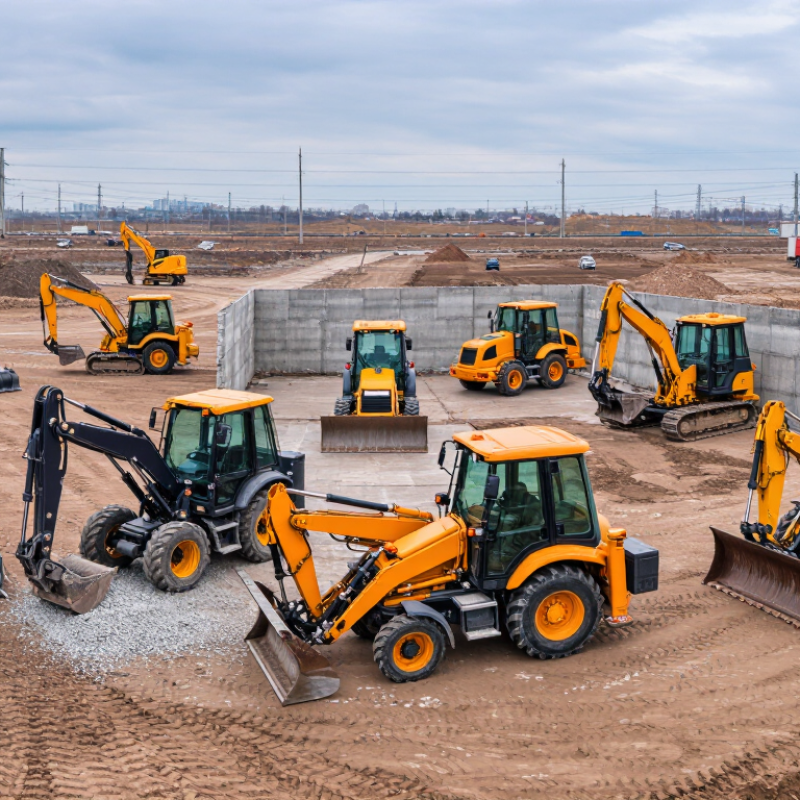
Top 10 Types of Backhoe Loaders for Global Buyers?

Understanding Backhoe Loader Types and Their Key Design Differences

Top 10 Types of Backhoe Loaders for Global Buyers?
Understanding Backhoe Loader Types and Their Key Design Differences

Backhoe loaders differ mainly in frame layout, digging reach, steering design, and attachment capacity. Standard backhoe loaders combine a front bucket with a rear digging arm for general construction. Compact models use shorter wheelbases and narrower frames, making them suitable for urban repairs and restricted sites. Center-pivot loaders turn around a central joint, while side-shift models move the rear arm sideways without repositioning the machine. Visibility matters.

Extendable-dipper loaders use a telescopic section to increase digging depth and reach. Telescopic boom designs provide more working distance, but they may reduce lifting strength when fully extended. Four-wheel-drive models improve traction on mud, gravel, and uneven ground. Articulated backhoe loaders use a hinged frame for tighter turns and better ground contact. They can feel less stable on steep slopes if operated poorly.

Heavy-duty backhoe loaders have reinforced frames, larger hydraulic systems, and higher breakout forces. Mini backhoe loaders reduce transport costs and surface damage, but their smaller buckets limit production volume. Loader-backhoe combinations may focus on stronger front loading performance, while multi-purpose models support breakers, augers, forks, and trenching tools. The categories often overlap, so buyers should compare hydraulic flow, operating weight, axle strength, and service access. In my field evaluations, attachment compatibility frequently mattered more than advertised horsepower. A larger machine is not always better. Soil conditions, transport limits, operator skill, and local repair resources can change the practical choice. That point deserves more attention.

Compact, Mini, and Side-Shift Backhoe Loaders

Top 10 Types of Backhoe Loaders for Global Buyers: Compact, Mini, and Side-Shift Backhoe Loaders

Compact and mini backhoe loaders suit narrow streets, small farms, and renovation sites. Their shorter turning radius helps operators work beside walls without constant repositioning. A 2024 Fortune Business Insights report values the global backhoe loader market at about USD 4.8 billion in 2023. It also forecasts steady growth through 2032, supported by infrastructure renewal and utility work. Market growth is not equal everywhere. Local transport limits still matter.

Mini models usually offer lower fuel use and simpler trailer transport. Buyers should check digging depth, auxiliary hydraulic flow, bucket width, and operating weight. A machine that looks compact may still overload a light trailer. Field experience suggests that tire clearance is often ignored during selection. Mud exposes that mistake quickly. Operators also need a clear view around the boom, especially near pedestrians and temporary barriers.

Side-shift backhoe loaders add another practical advantage. The rear attachment can move laterally, allowing trenching closer to buildings without moving the chassis. This feature can reduce surface damage and setup time on urban projects. A 2023 Off-Highway Research outlook links equipment demand with continuing road, drainage, and utility investment worldwide. However, side-shift systems add weight, maintenance points, and purchase cost. Buyers should compare service access, replacement-part availability, and operator training before choosing them. Reported productivity figures are useful, but soil, weather, and operator skill can change real results.

Standard, Heavy-Duty, and Long-Reach Backhoe Loaders

Top 10 Types of Backhoe Loaders for Global Buyers?

Standard, heavy-duty, and long-reach models serve different jobsite realities. Standard backhoe loaders suit utility trenches, farm drainage, road repair, and general excavation. Compact, side-shift, four-wheel-drive, extendable-dipper, and loader-focused versions expand the remaining categories.

According to the Research and Markets Backhoe Loaders Global Market Report 2024, demand is supported by infrastructure investment and equipment replacement across developing markets. However, market forecasts vary by region and reporting method.

Heavy-duty backhoe loaders use stronger booms, larger hydraulic systems, and reinforced frames. They perform better in hard soil, quarry edges, and repeated truck-loading cycles. Buyers should compare breakout force, operating weight, axle capacity, and hydraulic flow, not only engine power.

A machine working beside a crowded urban road needs stability and precise control.
A muddy rural site may need four-wheel drive and deeper tire traction.

Long-reach backhoe loaders extend the working envelope for canal cleaning, slope shaping, and deep excavation. They reduce machine repositioning, but their extra reach can reduce lifting capacity and stability.

The Global Infrastructure Hub estimates global infrastructure investment needs will reach about 3.7 trillion dollars annually through 2040. That pressure encourages versatile equipment, yet versatility is not free.

A longer dipper may sacrifice cycle speed. Field testing still matters. Paper specifications can mislead.

Four-Wheel-Drive, Rough-Terrain, Articulated, and Telescopic Backhoe Loaders

Top 10 Types of Backhoe Loaders for Global Buyers

Four-wheel-drive backhoe loaders suit muddy farms, uneven roads, and construction sites with changing ground conditions. Their front and rear axles share traction more effectively on slopes. This matters when a loaded bucket meets wet clay. Operators should still check tire size, turning radius, and transmission response before purchase. More traction does not remove rollover risks.

Rough-terrain backhoe loaders use stronger frames, higher ground clearance, and reinforced stabilizers. They perform well around quarries, drainage projects, and undeveloped work areas. However, rough-terrain capacity can increase fuel use and transport weight. That trade-off is easy to overlook. A machine may look powerful but feel slow during repeated loading cycles.

Articulated backhoe loaders bend at the center, helping operators work around walls, trees, and narrow access points. They can reduce repositioning time on irregular sites. Telescopic backhoe loaders extend their boom for deeper trenches or higher material placement. Their reach is valuable beside retaining walls and elevated platforms. Yet, long reach demands careful load charts and stable positioning. Buyers should compare hydraulic flow, attachment compatibility, service access, and operator visibility. Local soil conditions also matter. A model selected for dry ground may struggle badly after heavy rain. Some specifications are impressive on paper, but field productivity depends on the operator, maintenance routine, and actual job layout.

This chart compares representative maximum digging depths for ten commonly purchased backhoe-loader configurations. Values are typical industry specifications in metres and may vary with boom design, dipper length, attachment selection, and operating configuration.

How Global Buyers Can Select the Right Backhoe Loader Type

Top 10 Types of Backhoe Loaders for Global Buyers?

Selecting the right backhoe loader starts with the worksite, not the catalog. Global buyers may compare compact, standard, heavy-duty, side-shift, center-mount, extendable-arm, four-wheel-drive, two-wheel-drive, loader-focused, and utility configurations. Each type suits different ground conditions, transport limits, and digging demands. A compact model fits narrow urban sites, while a heavy-duty unit handles deeper excavation and harder soil. Measure the trench depth carefully. “Almost deep enough” can become an expensive mistake.

Check operating weight, bucket capacity, hydraulic flow, maximum reach, and lifting stability. Four-wheel drive improves traction on wet clay, slopes, and uneven farm roads. Two-wheel drive may reduce purchase and maintenance costs on paved sites. For frequent truck loading, prioritize loader breakout force and cycle speed.

For drainage work, examine boom geometry and rear visibility. A side-shift design can work closer to walls, but it may require more operator training.

Local support matters as much as machine specifications. Confirm spare-part availability, technician skills, warranty conditions, and service response times before ordering. Ask for performance data under realistic temperatures and soil conditions. Imported equipment can behave differently in tropical heat or high-altitude regions. A spreadsheet helps, but it can hide practical problems. I would test the machine with a full bucket, not an empty demonstration bucket. Also inspect controls, seat comfort, tire options, and transport dimensions. Small details often decide daily productivity.

FAQS

When is a compact backhoe loader a practical choice?

Choose one for narrow streets, small farms, renovation sites, and work beside walls. Its shorter turning radius reduces constant repositioning. Tight spaces matter.

What makes a mini backhoe loader useful for global buyers?

Mini models often use less fuel and fit smaller trailers. Check operating weight carefully. A compact machine can still overload a light trailer.

Which specifications should buyers compare before ordering?

Compare digging depth, bucket width, auxiliary hydraulic flow, operating weight, reach, and lifting stability. Measure the trench. “Almost deep enough” is still a problem.

What is the benefit of a side-shift backhoe loader?

Its rear attachment moves laterally, allowing trenching near buildings without moving the chassis. This can reduce surface damage and setup time. It costs more, though.

Should buyers choose four-wheel drive or two-wheel drive?

Four-wheel drive suits wet clay, slopes, and uneven farm roads. Two-wheel drive may cost less on paved sites. The cheaper option can struggle in mud.

What should buyers consider for truck-loading work?

Prioritize loader breakout force, bucket capacity, and cycle speed. Test with a full bucket. Empty demonstrations can look misleadingly impressive.

Why is local service support important?

Confirm spare-part availability, technician skills, warranty conditions, and response times. A strong machine becomes inconvenient when one small part is unavailable.

Can reported productivity figures predict actual results?

Not reliably. Soil, weather, temperature, altitude, and operator skill change performance. A spreadsheet helps, but it can hide practical trouble.

What safety details deserve attention during selection?

Check rear visibility, boom clearance, controls, seat comfort, and tire options. Operators need a clear view near pedestrians and temporary barriers. Small details matter daily.

Conclusion

This guide explains the main Backhoe Loader types available to global buyers and the design differences that affect their performance. Compact and mini models are suited to narrow urban sites, landscaping, and light construction, while side-shift versions offer greater flexibility when working close to walls or other obstacles. Standard models provide balanced digging and loading capability, whereas heavy-duty machines are built for demanding ground conditions and higher workloads. Long-reach backhoe loaders extend working distance for excavation projects that require additional reach.

The article also introduces four-wheel-drive and rough-terrain models for improved traction on uneven surfaces, articulated designs for enhanced maneuverability, and telescopic backhoe loaders for versatile reach and positioning. To select the right type, buyers should compare operating weight, digging depth, lifting capacity, mobility, attachment compatibility, fuel efficiency, maintenance requirements, transport limitations, and local working conditions. Matching machine design with project scale, terrain, and budget helps ensure reliable productivity and long-term value.

Ethan

Ethan

Ethan is a seasoned marketing professional with a deep expertise in our company's innovative product line. With a passion for sharing knowledge and insights, he takes the lead in regularly updating our corporate blog, where he explores industry trends, product features, and effective marketing......