 Wings
Wings
Wings
Wings
Choosing among the Top 10 Mini Excavators for Sale Worldwide requires more than comparing horsepower and purchase prices. A machine that performs well on a compact urban site may struggle on rocky ground or uneven farmland. Buyers should examine operating weight, digging depth, tail-swing design, hydraulic flow, attachment compatibility, transport needs, and local service support. These details become real at the worksite, where a narrow gate, muddy trench, or overloaded trailer can change the decision quickly.
Mike Fitzgerald, a senior product marketing manager known for his work with compact excavators, has said, “The best machine is the one that matches the job, not the one with the biggest numbers.” That principle guides this review. Each Mini Excavator is considered through practical use, not showroom appearance alone. Fuel efficiency, operator visibility, cab comfort, noise, control response, and maintenance access also matter during long working days. Small details count.
Prices and specifications can vary between countries. Dealer networks, import costs, emissions requirements, and available attachments may affect the final value. This guide cannot capture every local condition. That is worth admitting. A highly rated model may still be unsuitable for a contractor with limited hydraulic tools or weak regional support.
The following selection highlights globally available machines from respected manufacturers. It focuses on balanced performance, dependable construction, and useful versatility. Expect differences between models. More importantly, expect a clearer way to identify the Mini Excavator that fits your soil, workload, budget, and working space. Real jobs are rarely perfect. Your choice should allow for that.
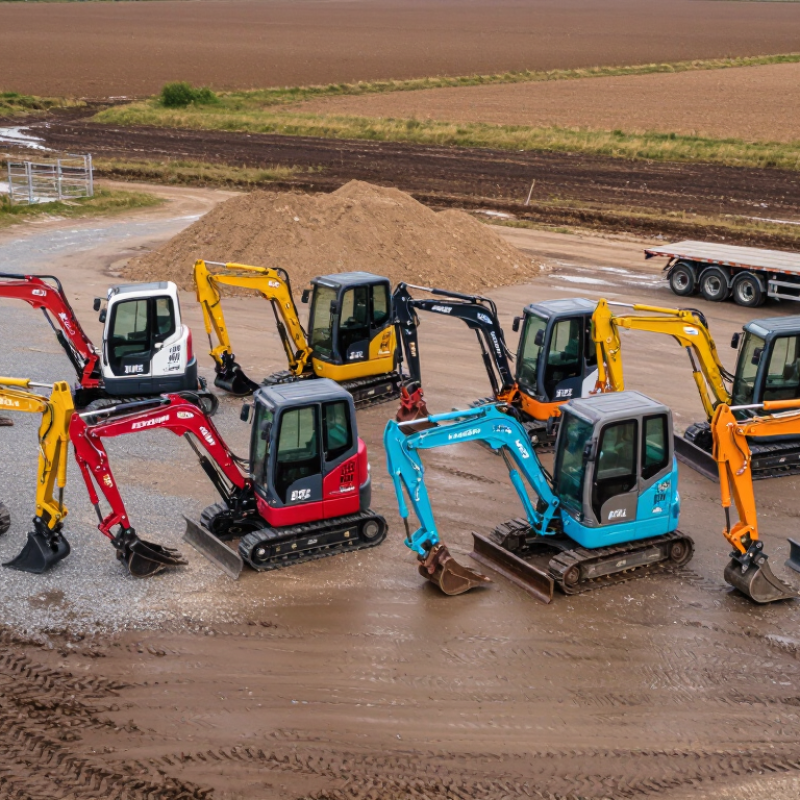
Mini excavators are compact hydraulic machines designed for digging, lifting, grading, and light demolition. They usually weigh below six tonnes, although classifications differ across regions. Their narrow frames can pass through garden gates, warehouse doors, and crowded construction sites. A zero-tail-swing design also reduces the risk of striking nearby walls.
Their common uses include trenching for cables, preparing drainage lines, landscaping, foundation work, and municipal repairs. Attachments expand their value. Buckets, hydraulic breakers, augers, grapples, and tilt couplers support different tasks. On a residential site, an experienced operator may dig beside a finished wall without disturbing its foundation. Soil conditions still matter. Wet clay can slow production, while loose gravel may require careful trench control.
The global mini excavator market is shaped by urban construction, rental demand, infrastructure renewal, and labor shortages. Buyers in Europe often prioritize low noise and transport efficiency. Contractors in Asia, Africa, and the Middle East may focus more on durability, service access, and fuel costs. No machine fits every site. A worldwide top-ten comparison should examine operating weight, dig depth, lifting capacity, hydraulic flow, cab comfort, attachment support, and parts availability. Published specifications need verification because equipment performance changes with attachments, soil, and operator skill. Price alone can mislead. A cheaper unit may lose value through difficult servicing or limited local support. That deserves honest review.
| Rank | Mini Excavator Class | Operating Weight | Typical Engine Power | Typical Maximum Digging Depth | Typical Maximum Reach | Typical Bucket Capacity | Primary Applications | Global Market Suitability |
|---|---|---|---|---|---|---|---|---|
| 1 | Micro Excavator | 0.8–1.5 t | 8–15 kW | 1.7–2.4 m | 3.0–4.0 m | 0.02–0.06 m³ | Indoor demolition, narrow-access work, residential landscaping, utility repairs | Highly suitable for dense urban areas, small contractors, and rental fleets |
| 2 | Compact 1.5-Ton Excavator | 1.4–1.8 t | 11–19 kW | 2.2–2.7 m | 3.8–4.6 m | 0.03–0.08 m³ | Drainage, cable installation, garden construction, light foundation work | Strong demand in Europe, Asia-Pacific, North America, and urban markets |
| 3 | Compact 2-Ton Excavator | 1.8–2.4 t | 13–22 kW | 2.4–3.0 m | 4.2–5.2 m | 0.04–0.10 m³ | Landscaping, septic systems, trenching, small-scale site preparation | Balanced choice for contractors requiring transportability and productivity |
| 4 | 2.5–3-Ton Excavator | 2.5–3.5 t | 18–27 kW | 2.7–3.4 m | 4.8–5.8 m | 0.06–0.14 m³ | General excavation, road maintenance, trenching, utility construction | Versatile worldwide segment with a good productivity-to-transport ratio |
| 5 | 3.5–4-Ton Excavator | 3.5–4.5 t | 24–33 kW | 3.1–3.8 m | 5.4–6.4 m | 0.08–0.18 m³ | Commercial landscaping, agricultural drainage, foundation excavation, material handling | Suitable for small and medium contractors needing more breakout force |
| 6 | 5-Ton Excavator | 4.5–5.8 t | 30–40 kW | 3.4–4.1 m | 5.9–6.9 m | 0.10–0.22 m³ | Roadwork, building foundations, heavy trenching, farm and municipal projects | Popular in mixed-use fleets where power and mobility are both important |
| 7 | 6-Ton Excavator | 5.8–6.8 t | 35–45 kW | 3.7–4.3 m | 6.3–7.3 m | 0.12–0.28 m³ | Utility corridors, bulk earthmoving, site grading, demolition with auxiliary tools | Well suited to developing infrastructure and regional construction projects |
| 8 | 7–8-Ton Excavator | 6.8–8.5 t | 42–55 kW | 3.9–4.6 m | 6.8–8.0 m | 0.16–0.36 m³ | Large-scale trenching, quarry support, road construction, demolition, lifting tasks | Effective where higher hydraulic output is needed without using a full-size excavator |
| 9 | Zero-Tail-Swing Excavator | 2.5–8.0 t | 18–55 kW | 2.7–4.6 m | 4.8–8.0 m | 0.06–0.36 m³ | Urban excavation, roadside work, confined construction sites, wall-adjacent digging | Particularly valuable in markets with restricted job-site access and limited clearance |
| 10 | Long-Reach Mini Excavator | 3.0–8.0 t | 22–55 kW | 4.5–7.0 m | 7.0–10.0 m | 0.05–0.25 m³ | Canal cleaning, slope maintenance, pond work, environmental restoration, deep excavation | Specialized global segment for projects requiring extra reach rather than maximum digging force |
Data note: Specifications are representative worldwide ranges for commonly sold mini and compact excavator configurations. Actual figures vary according to operating equipment, boom and arm configuration, track width, hydraulic options, and regional regulations.
Digging depth, breakout force, hydraulic flow, and stability matter most. A narrow machine may work beside a wall, but limited reach can slow production.
No. A compact zero-tail model may outperform a heavier machine in narrow roads and crowded yards. A bigger excavator brings strength, but transport becomes harder.
An ultra-compact model near one ton can enter buildings more easily.
Machines around five or six tons offer stronger trenching and improved stability.
Hydraulic flow affects breakers, augers, grapples, and other tools.
Request serial-number records, inspection videos, warranty terms, and service history.
Calculate the full landed cost, including transport, insurance, duties, handling, and possible delays.
They can suit noise-sensitive sites, indoor work, and some urban projects.
Budget for filters, tracks, hydraulic oil, transport, repairs, and downtime.
Local parts availability and trained service support may matter more than one extra meter.
This guide presents a practical overview of the Mini Excavator market worldwide, explaining what these compact machines are, where they are used, and why they are valued for construction, landscaping, agriculture, utilities, and renovation projects. It outlines how buyers can evaluate machines for sale by comparing digging force, lifting capacity, operating weight, fuel efficiency, hydraulic performance, durability, operator comfort, maintenance needs, and total ownership cost.
The ranking of the top 10 Mini Excavators focuses on performance, versatility, reliability, and overall value rather than brand recognition. Readers will also learn how key specifications, interchangeable attachments, transport dimensions, and operating capabilities affect job-site productivity. Additional guidance covers selecting equipment for different regions, checking seller support and machine condition, planning shipping and import arrangements, estimating delivery expenses, and preparing for long-term maintenance, parts availability, storage, and safe operation.
