
Wings
Global projects rarely unfold on smooth warehouse floors. They cross gravel, mud, uneven concrete, steep access roads, and partially completed sites. An Off Road Forklift is designed for these conditions, combining high ground clearance, rugged tires, and strong lifting capacity. It can move steel beams beside a bridge, pallets across a muddy compound, or stone blocks near a remote construction camp.
Market evidence supports this need. The International Federation of Robotics reported continued investment in logistics automation and material-handling productivity in its World Robotics 2023 report. Meanwhile, Fortune Business Insights identifies construction, agriculture, and industrial logistics as important demand areas for rough-terrain material-handling equipment. These reports do not prove that every project needs an Off Road Forklift. Site conditions still decide the answer.
Manitou Group CEO Michel Denis has often emphasized the importance of machines that combine performance, safety, and adaptability. His practical message can be expressed clearly: “A machine must fit the jobsite, not force the jobsite to fit the machine.” That principle matters when delivery routes change daily. Experienced operators also know that four-wheel drive cannot correct poor planning, excessive loads, or weak ground assessment. A forklift may look powerful yet remain unsuitable on unstable soil. That uncomfortable detail deserves attention.
Choosing the right model requires checking load charts, tire design, turning radius, operator visibility, maintenance support, and local training requirements. Reports provide direction. Field experience provides judgment. The strongest global projects use both.
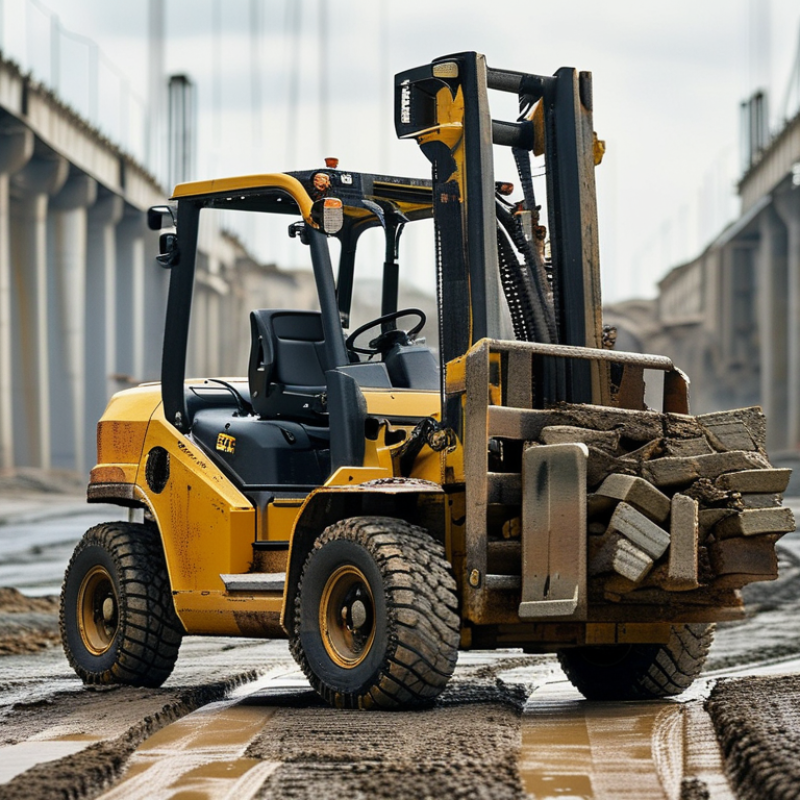
An off-road forklift is a powered industrial truck built for uneven outdoor surfaces. Unlike warehouse forklifts, it uses large pneumatic tires, higher ground clearance, and a stronger chassis. These features help it cross gravel, mud, compacted soil, and temporary work roads. Some models also include stabilizers or all-wheel drive for improved control.
Its purpose is simple: move heavy loads where paved access is limited. Construction materials, timber, pipes, and agricultural supplies are common examples. The operator still needs to consider slope, surface strength, load balance, and visibility. A rough-looking site does not automatically require the largest machine.
Safety remains a serious concern. The U.S. Occupational Safety and Health Administration reports about 85 annual forklift-related fatalities and 34,900 serious injuries in the United States. That figure includes powered industrial trucks broadly, but it shows why outdoor conditions demand careful planning. ISO 5053-1 provides terminology and classifications for industrial trucks, helping project teams compare equipment more consistently. In practice, tire pressure, fork height, and travel speed can matter as much as rated capacity. The equipment is capable, but not careless. A muddy shortcut may save minutes and create a rollover risk. That trade-off deserves a second look.
Why Choose an Off Road Forklift for Global Projects?
Off-road forklifts are designed for ground that standard warehouse trucks cannot handle. Their large pneumatic tires grip loose gravel, mud, and uneven soil. High ground clearance helps the chassis pass over rocks, ruts, and temporary construction debris. Four-wheel drive can maintain traction when one tire loses contact. That matters.
On challenging terrain, stability depends on more than engine power. A trained operator checks the load center before entering a slope. Heavy materials should remain low and close to the mast. Uneven ground can shift a load quickly, especially during a turn. A wide wheelbase improves confidence, but it does not remove rollover risks. Speed must stay controlled. Wet clay is especially deceptive. It may look firm, then collapse beneath a loaded tire.
In remote projects, practical details often decide performance. Sealed electrical connections reduce trouble after rain and dust exposure. Strong cooling systems help during long hours in hot regions. Adjustable forks can handle pallets, pipes, and irregular cargo, although one attachment cannot suit every task. Daily inspections should cover tire pressure, hydraulic leaks, brakes, and steering response. Skipping one check may seem harmless. It is not. Even experienced teams can misjudge a hillside after changing weather. Off-road capability improves access, but careful route planning and operator judgment still determine safe, reliable handling.
Global projects rarely provide smooth, predictable ground. Construction sites may include loose gravel, mud, steep ramps, and unfinished access roads. An off road forklift needs four-wheel drive, high ground clearance, deep-tread tires, and strong frame protection. These features support stable material handling near bridges, remote facilities, and temporary warehouses. The World Industrial Truck Statistics 2023 report recorded approximately 2.38 million industrial truck shipments worldwide. Demand remains broad, but terrain changes the equipment decision.
Load capacity is only one part of project readiness. Operators also need clear visibility, dependable braking, rollover protection, and accurate load charts. The International Labour Organization estimates 2.93 million work-related deaths annually. Safe access, trained operators, and daily inspections therefore deserve serious attention.
Telematics can record operating hours, impacts, fuel use, and maintenance alerts across different countries. Service access matters too. A forklift that is powerful but difficult to repair may create expensive delays. Specifications can look impressive on paper. Field conditions often disagree.
Tips: Match tire design to the local surface before ordering equipment. Confirm ramp grades, average load weights, and transport limits. Keep filters, tires, and critical parts available near the worksite. Do not rely on one global setup. Local weather, operator habits, and service skills can change performance. A short site trial may reveal problems that a technical brochure misses.
Global projects rarely offer clean, level ground. An off-road forklift is built for uneven surfaces, loose soil, and changing weather. Its larger tires can cross gravel, mud, and compacted earth with better stability. Construction crews can unload steel beams beside unfinished buildings. They can also move pallets without waiting for permanent roads. This reduces manual handling and keeps materials closer to the work zone.
Construction safety still requires discipline. OSHA reports about 85 annual forklift fatalities in the United States, with roughly 34,900 serious injuries. Better ground clearance does not remove blind spots or load risks. Operators need site-specific training, daily inspections, and clear travel routes. A raised pallet can block visibility quickly. Small details matter.
Agricultural teams use these machines around feed stores, irrigation equipment, and harvested crops. Strong traction helps after rain, when ordinary warehouse equipment may struggle. Infrastructure projects gain similar advantages near bridges, rail corridors, and remote utility sites. The Global Infrastructure Hub estimated global infrastructure investment needs at 94 trillion dollars by 2040, leaving a major funding gap. Reliable material handling becomes important where delays are expensive. Still, fuel use, soil compaction, and maintenance costs deserve honest review. An off-road forklift is not a magic machine. Poor attachment choices can damage fragile loads, while careless driving can rut a field or destabilize a roadside platform. Practical experience often reveals this gap between specifications and real ground conditions.
Selecting an off-road forklift for global projects starts with the worksite, not the catalog. Measure soil strength, slope angles, doorway widths, and seasonal rainfall. A forklift that performs well on dry gravel may struggle after tropical storms. Record load weight, load center, lift height, and daily travel distance. Do not estimate these figures from memory.
Choose tires, ground clearance, traction systems, and attachments for the harshest expected conditions. Pneumatic tires may suit rocky yards, while flotation tires can reduce sinking on softer ground. Check rated capacity at the actual lift height, not only the headline capacity. Worldwide deployment also requires careful documentation. Confirm operating manuals, maintenance schedules, safety labels, and conformity records meet local requirements. Ask about spare parts, technician training, and remote troubleshooting before shipping the machine.
Deployment needs a realistic site plan. Inspect unloading areas, fuel or charging access, storage space, and emergency routes. Train operators with the actual loads and terrain they will face. Short classroom sessions are not enough. On mixed-terrain projects, daily inspections often reveal loose wheel nuts, damaged forks, or hydraulic leaks early. Keep inspection forms simple, with photos when language barriers exist. One mistake deserves reflection: teams sometimes choose maximum capacity and overlook transport dimensions. A powerful forklift that cannot reach the work zone is still the wrong model.
: It is a powered truck for uneven outdoor surfaces. Large pneumatic tires and high ground clearance help it cross gravel, mud, and compacted soil. It carries materials such as pipes, timber, and construction supplies.
An off-road model has a stronger chassis, larger tires, and better clearance. Some versions include all-wheel drive or stabilizers. Warehouse models usually suit smooth, paved floors.
Measure soil strength, slope angles, access widths, and seasonal rainfall. Check the planned route after heavy rain, not only during dry weather. Mud can change the entire risk level.
Record the load weight, load center, lift height, and travel distance. Confirm capacity at the actual lifting height. A headline capacity can be misleading.
Pneumatic tires often suit rocky yards and rough ground. Flotation tires may reduce sinking on softer surfaces. The best choice depends on soil, weather, and daily travel.
Forks can handle pallets and many construction materials. Other attachments may suit pipes, timber, or unusual loads. Confirm attachment compatibility and reduced lifting capacity before use.
Inspect tire pressure, wheel nuts, forks, hydraulic lines, and visibility each day. Control speed on slopes and keep loads balanced. A muddy shortcut may save minutes and cause a rollover.
Confirm manuals, safety labels, maintenance records, and local conformity documents. Arrange spare parts and technician support before shipping. Check unloading space, charging or fuel access, and emergency routes.
Teams sometimes choose maximum capacity and ignore transport dimensions. It happens. A powerful forklift cannot help if it cannot reach the work zone. Recheck the whole route before purchase.
An Off Road Forklift is designed to move, lift, and place materials safely across uneven, muddy, rocky, or undeveloped ground. Unlike standard warehouse forklifts, it combines strong lifting capacity, durable construction, high ground clearance, and specialized tires to maintain stability on challenging terrain. These capabilities make it valuable for projects where paved access is limited or conditions change frequently.
For construction, agriculture, and infrastructure operations, an Off Road Forklift can improve material handling efficiency, reduce manual labor, and support work across remote or demanding sites. Global project teams should consider terrain, load requirements, climate, transport limitations, operator visibility, maintenance access, and local safety standards when selecting a model. Proper training, pre-use inspections, scheduled maintenance, and careful deployment planning are essential to ensure reliable performance and safe operation in different environments.
